
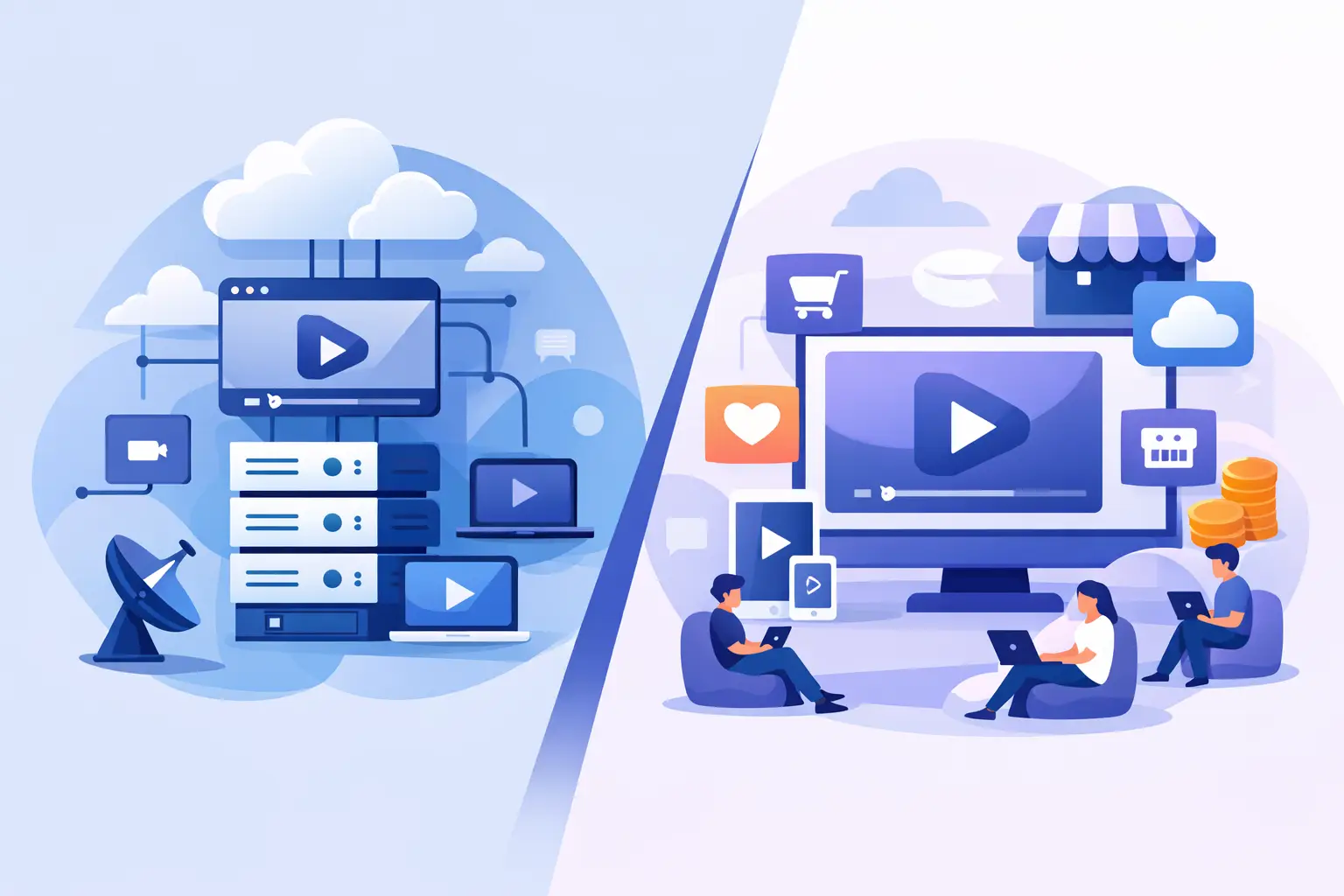
If you are planning to sell access to video content, the biggest early decision is not your theme, your payment gateway, or even your hosting plan. It is choosing between self hosted streaming vs marketplace. That choice affects your margins, your brand, your customer data, and how much control you keep once your business starts growing.
For WordPress site owners and video entrepreneurs, this is not a small technical preference. It is a business model decision. A marketplace can help you get listed fast, but it also places your content inside someone else’s system. A self-hosted setup gives you your own platform, your own rules, and a much clearer path to building a real subscription brand.
Self hosted streaming vs marketplace: what changes in practice
A marketplace is a platform where creators publish content inside an existing ecosystem. The platform owns the customer experience, the checkout flow, the discovery model, and often a meaningful slice of the revenue. You get access to their audience, but you operate within their limits.
Self-hosted streaming means you run your own branded video site. Your content lives inside your own website experience, usually supported by your hosting, your video delivery setup, and your membership and payment tools. You control how users browse, how they subscribe, what they pay, and what happens after purchase.
On the surface, the trade-off looks simple. A marketplace is easier to start. Self-hosted gives you more control. But the real difference shows up in monetization, retention, and long-term asset value.
Branding is either yours or borrowed
If your goal is to build a recognizable streaming business, branding matters more than many first-time founders expect. In a marketplace, your content sits beside competing offers, platform messaging, and a user interface you do not control. Even when your logo appears, the platform still owns the environment.
That creates a ceiling. Users may remember the marketplace before they remember your brand. If they cancel, browse competitors, or respond to platform promotions, you have limited influence over that behaviour.
With a self-hosted model, the website is the product experience. Your homepage, browse pages, membership options, episodic content structure, and member dashboard all work under your brand. That matters for premium education, niche media, fitness libraries, faith-based content, entertainment catalogues, and any business trying to look established from day one.
For many creators, this is where the marketplace starts to feel restrictive. It can distribute content, but it does not help you build a destination.
Revenue looks different once you do the math
The appeal of marketplaces is obvious. You avoid some setup work, and in some cases you gain built-in exposure. But that convenience often comes with platform fees, commission cuts, payout rules, and pricing constraints.
Those costs can seem manageable when revenue is small. Once subscriptions, rentals, or one-time purchases start increasing, the margin loss becomes harder to ignore. You may also have fewer options for bundling memberships, selling individual videos, offering limited-time rentals, or creating custom purchase flows.
A self-hosted video business usually asks more of you upfront. You need the right site setup, payment support, access controls, and a proper video browsing experience. But you keep much more authority over how revenue is earned. That includes subscription plans, member tiers, transactional video sales, promotional pricing, and payment method flexibility.
This is one of the strongest arguments in the self hosted streaming vs marketplace decision. The more serious you are about monetization, the more valuable direct control becomes.
Customer ownership is not a side issue
Many video businesses focus on publishing and pricing first. Customer ownership should be just as high on the list.
In a marketplace, the platform usually controls the customer relationship more than you do. You may get limited buyer information, limited communication tools, and limited ability to shape the full retention journey. That makes it harder to improve renewals, win back churned members, or build a long-term marketing system around your audience.
With your own platform, your customers are joining your site, not renting access through another company’s interface. You can manage memberships directly, shape the account experience, and build offers around actual customer behaviour. That is a major advantage if you plan to grow beyond a small content catalogue.
For agencies and publishers, this point is even more practical. A self-hosted platform is an owned digital property. It can be improved, expanded, redesigned, and integrated with other business systems over time. A marketplace profile cannot offer that same leverage.
Flexibility matters when your content model changes
Most video businesses do not stay static. A course creator may add memberships later. A publisher may shift from ad-supported content to premium subscriptions. A niche streaming startup may begin with rentals, then move into recurring plans and bundled access.
Marketplaces tend to work best when your model fits their framework. The moment you need custom memberships, deeper content restriction, TV-show style organization, or a more polished Netflix-style browsing structure, the platform can start feeling narrow.
Self-hosted streaming is better suited to businesses that expect change. You can organize series, seasons, and episodes in a way that matches how your audience actually watches. You can create restricted libraries for different membership levels. You can support subscriptions, purchases, and rentals without rebuilding your business around somebody else’s roadmap.
That does not mean self-hosted is right for everyone. If you want the fastest possible route to listing content with minimal setup and you are comfortable accepting platform limits, a marketplace may be enough. But if you are building for scale, flexibility is not extra. It is foundational.
The technical side is real, but it is manageable
One reason some businesses hesitate on self-hosting is fear of complexity. That concern is fair. Running your own streaming site does involve decisions around video hosting, WordPress setup, membership protection, payments, and user experience.
But the key question is not whether self-hosting has moving parts. It is whether those parts can be handled with the right stack. In most cases, they can.
A strong WordPress-native setup lets you publish videos, structure episodic content, control access by membership, and monetize through subscriptions or transactions without building a custom platform from scratch. That is a very different scenario from trying to piece together a streaming business with generic plugins that were never designed for video subscriptions.
This is where a specialized solution makes the difference. A system like WP Video Subscriptions is built for site owners who want their own video platform inside WordPress, with content restriction, show and episode management, and commerce features aligned to how streaming businesses actually operate.
Self hosted streaming vs marketplace for different business types
If you are a solo creator testing an idea with a small library and no immediate need for brand control, a marketplace can be a reasonable short-term entry point. It reduces setup friction and may help validate demand.
If you are an educator selling premium training, a media company building a subscriber base, or an entrepreneur launching a niche streaming service, self-hosted usually makes more sense. Your offer depends on retention, presentation, and ownership. Those are difficult to maximize in a closed platform.
If you are an agency building for clients, the answer is even clearer. Clients paying for a professional streaming website expect a branded asset they control, not a profile inside someone else’s marketplace. They want recurring revenue, flexible payments, organized content, and room to grow.
The real question is what kind of business you want to own
The self hosted streaming vs marketplace decision is not only about features. It is about whether you want to participate in another platform or build one under your own name.
Marketplaces can be useful. They lower some barriers and can simplify launch. But convenience often comes with dependency. Your pricing, your audience access, your design freedom, and your future options are all shaped by a platform you do not own.
A self-hosted streaming site asks for more intention at the start, but it gives you something much more valuable in return: a real business asset. Your brand leads. Your customers join your platform. Your monetization model fits your goals instead of the other way around.
If you expect your video business to become a serious revenue channel, build it where you keep the control.
