
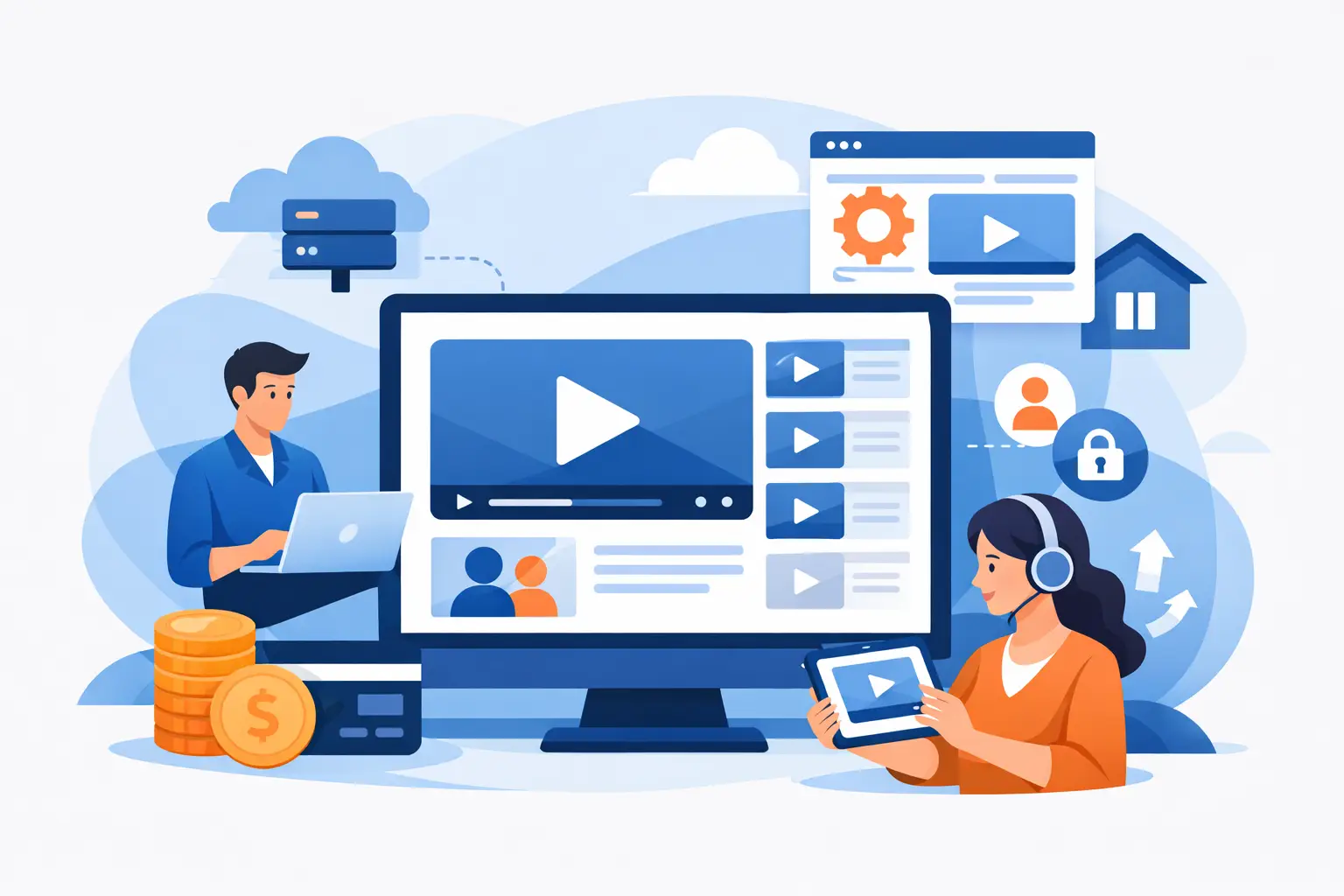
A paid video library can look polished, attract an audience, and still fail to become a sustainable business if someone else controls the customer relationship. A video membership website changes that equation. It gives you a branded place to publish premium programming, set your own prices, restrict access, and collect revenue through your own WordPress site.
For creators, educators, publishers, and media brands, the goal is not simply to put videos behind a login. The goal is to build your own video platform: one that makes content easy to discover, makes payment straightforward, and gives members a reason to return.
Start with the membership offer, not the video upload
The strongest platforms are built around a clear reason to subscribe. Before choosing a layout or importing a video library, define what a member receives and how often they receive it. A fitness business may publish new classes each week. A production company may release episodes on a schedule. An educator may offer a structured library of lessons alongside new workshops.
Your offer should answer three practical questions: What is protected? Who is it for? Why should they pay now rather than watch free content elsewhere?
A membership works best when the value compounds over time. One excellent documentary might be better sold as a one-time purchase or rental. A growing library of interviews, tutorials, classes, or serialized shows is a stronger fit for recurring membership revenue. Many businesses use both models, giving viewers a choice between subscribing for broad access or purchasing a specific premium release.
This is where platform ownership matters. You can test monthly and annual plans, introduce a limited-time rental for a new release, or offer a one-time purchase to viewers who do not want a recurring commitment. Your pricing can match the content instead of being limited by a marketplace’s business model.
Build a video membership website around discovery
People do not browse a premium video service the way they read a standard blog. They expect to see featured programming, recognizable collections, clear categories, and a simple route to the next video. If the library is hard to explore, even excellent content gets overlooked.
Treat your homepage as a programming surface. Feature the newest release, promote a popular series, and show collections that help different audiences find a starting point. A wellness platform might organize content by workout length, instructor, intensity, and goal. A niche publisher could organize videos by topic, season, or event. The right structure depends on how your audience thinks about the content.
A Netflix-style browsing experience is valuable because it reduces the work a visitor must do before pressing play. But visual presentation alone is not enough. Each video needs useful information: a strong title, a clear description, an image that communicates the topic, and placement in the right collection or series.
Use series and episodes when the format calls for it
Serialized programming needs more than a folder full of videos. Members should be able to understand where an episode belongs, move through a season, and pick up where they left off. Dedicated series and episode management gives recurring programming the structure viewers already expect from a modern streaming service.
This is especially useful for entertainment publishers, ministries, interview shows, lesson-based courses, and any business releasing content in parts. It also gives you more opportunities to promote an entire series instead of asking members to discover every episode individually.
Do not force every video into a series, though. Standalone workshops, recordings, and special events can work better as individual titles grouped into practical collections. The structure should make your library easier to use, not create extra administration.
Protect access without making the experience frustrating
The paywall is part of the product experience. It needs to protect the value of your work while making the next step obvious to the right viewer.
A visitor who reaches a protected video should understand what they are seeing, what access requires, and which plan fits. Hiding every detail can make the content feel anonymous. Showing a description, preview image, or trailer can give prospective members enough confidence to join. For premium programmes with a strong fan base, a short preview may be all that is needed. For courses and professional training, a free introductory lesson can do more selling than a generic sales page.
Access rules also need to reflect your actual offer. You may want one membership tier for the full library, another for a specialist collection, and individual purchase options for selected videos. A rental can create urgency for a live event replay or a new film. A one-time purchase can serve viewers who want permanent access without a subscription.
Keep these rules understandable. Too many overlapping plans create support requests and abandoned checkouts. Start with the smallest pricing structure that supports your business, then add options when customer behaviour shows a real need.
Make payments part of your ownership strategy
A membership platform is only independent if the payment workflow supports your business. You need to know who paid, what they bought, when their access renews, and how to handle changes when a subscription ends or a payment fails.
Offering familiar payment methods can remove unnecessary friction. Credit cards will be the default for many customers, while PayPal can be useful for audiences that prefer it. Cryptocurrency payments may suit particular international or technology-focused communities. The right mix depends on your audience, but the central principle is the same: keep the transaction connected to your own site and customer records.
With WP Video Subscriptions, WPVS Premium, and Rogue WP Payments, WordPress site owners can combine premium video presentation, access control, and direct payment acceptance in one self-managed platform. That means you can run recurring memberships alongside purchases and rentals without commissioning a custom streaming application.
Payment setup deserves careful attention before launch. Test successful transactions, failed payments, cancellation flows, receipts, and the member experience after access expires. These are not background details. They directly shape trust in your service and reduce the time you spend answering preventable support questions.
Plan your launch like a programme release
Do not wait until you have hundreds of videos. A focused library with a clear promise can be more compelling than a large, poorly organized archive. The better question is whether your first release gives a new member enough value to join and a reason to stay.
Prepare your core viewing experience before promoting it. This includes a strong homepage, complete video pages, organized categories, a clear membership page, and checkout flows tested on desktop and mobile. If you are launching a series, have enough episodes ready that members can understand the direction of the programme. If new videos will arrive weekly, state that rhythm clearly.
Your initial content can include a mix of cornerstone videos and a release schedule. Cornerstone content establishes immediate value. Scheduled releases create momentum. The balance depends on your production capacity. Promising weekly uploads is not helpful if your team can only reliably publish once a month.
Measure behaviour, then improve the library
Once members begin watching, pay attention to more than signups. Look for the videos that drive subscriptions, the collections people browse most, and the point where viewers stop engaging. These patterns can guide your next production decisions.
For example, a long-form educational platform may find that short companion lessons bring people into a larger course. A media brand may learn that one recurring show attracts the most memberships, while special-event rentals generate additional revenue. That information should influence promotion, homepage placement, and future programming.
You should also review churn with honesty. Some cancellations are unavoidable. Others may point to unclear expectations, an inconsistent release schedule, weak content discovery, or a plan that does not match how customers want to pay. Improve the experience before reaching for more complicated marketing tactics.
A well-run video membership website becomes more valuable with every organized release, every returning viewer, and every customer relationship you keep on your own terms. Start with an offer you can deliver consistently, make premium access easy to understand, and give your audience a video destination worth coming back to.
